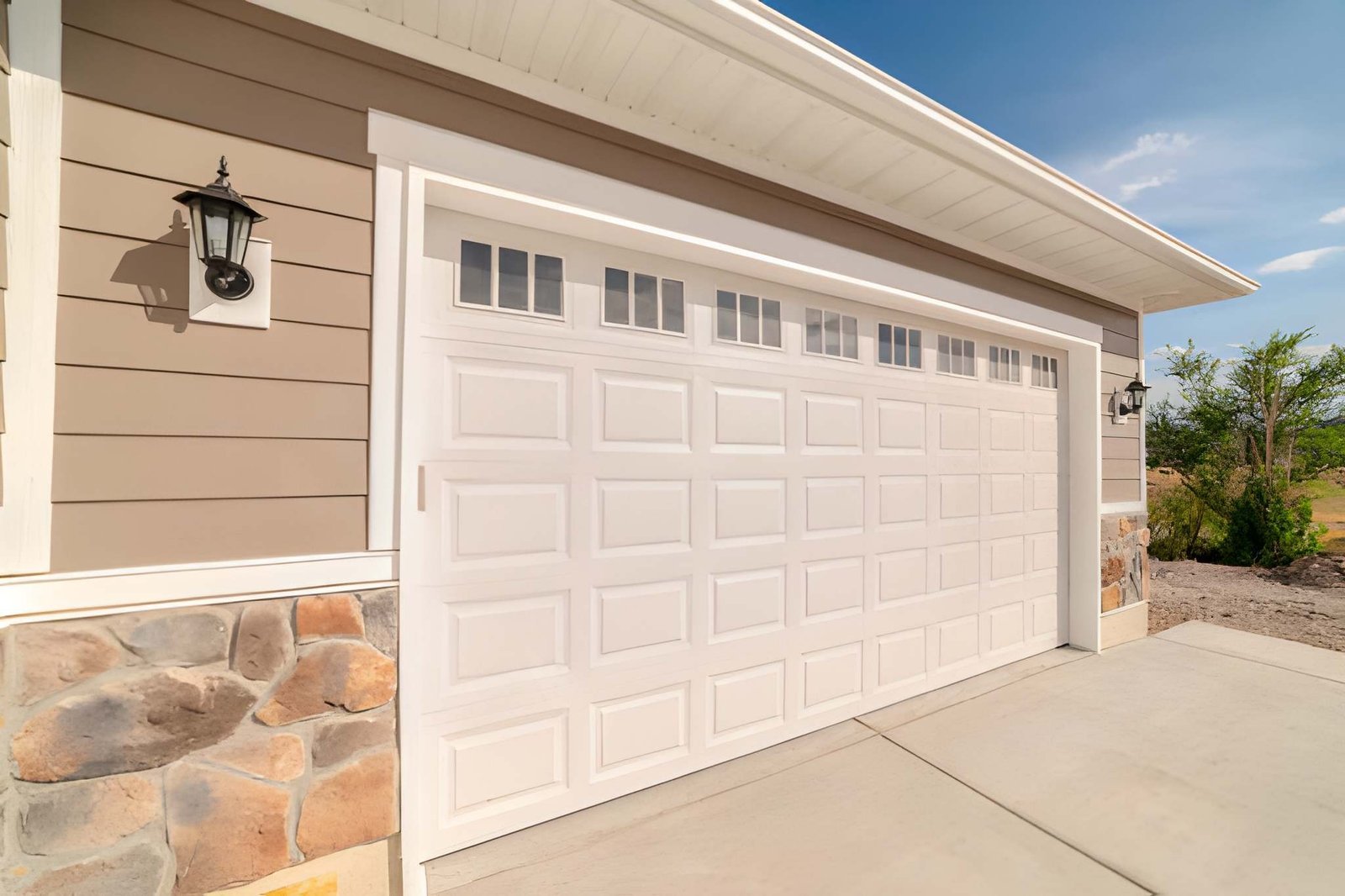

A garage door is the heaviest moving object in most homes.
Modern doors have real safety engineering built in — but only if it is working, and only if people use the door sensibly.
The three protections that should be working
Test these
- Photo-eye sensors — the beam near the floor that reverses the door if anything crosses it.
- Mechanical auto-reverse — the door reverses if it contacts an obstruction.
- Pinch-resistant sections — modern panels are shaped so fingers cannot be caught between them.
Test the first two monthly. It takes two minutes and it is covered in our auto-reverse guide.
The wall button height rule
Wall controls should be mounted at least five feet up, out of a small child's reach, and where whoever presses it can see the whole doorway.
That second part matters as much as the first.
The safety features are there for the moment somebody is not watching. But they are a backstop, not a babysitter.
BH Garage Door USA technicians
Three habits worth teaching
The door is not a toy and the remote is not a toy. Never run under a moving door. And never touch the Garage Door Springs, cables or the bottom bracket — those are under enough tension to cause serious injury.
Older doors
If your Garage Door Opener predates the mid-1990s it may have no photo-eyes at all. That is a genuine reason to replace it, regardless of whether it still works.
Why this is worth two minutes of your month
A garage door is the heaviest moving object in most homes.
It sounds obvious. It is not. Modern doors have real safety engineering in them — two independent reversing systems, pinch-resistant sections, containment for the Garage Door Springs.
All of it only helps if it is working. And all of it can fail quietly, with no warning at all that it has failed. Most people find this out the expensive way.
The two tests, and how to do them properly
The first is the photo-eyes. With the door open, press close and pass something through the beam near the floor. A broom handle is ideal. Never a hand or a foot.
So what does that mean day to day? The door should stop and reverse immediately.
The second is the mechanical reverse. Lay a solid object flat in the opening — a length of timber a couple of inches thick is traditional — and close the door onto it.
It should reverse on contact. If it keeps pushing, or stops without reversing, stop using the Garage Door Opener until it has been adjusted. It is a small thing that turns into a big thing.
What we check on a safety visit
Every visit runs the same way, whatever the original complaint was. It is quicker than it sounds, and it stops us treating a symptom and calling it a fix.
- Photo-eye alignment and the condition of both lenses.
- The mechanical auto-reverse, tested against a solid object on the floor.
- Force settings — too sensitive gives nuisance reversals, too high defeats the point entirely.
- Spring containment on any door still running extension springs.
- The condition and reach of the emergency release.
If something on that list is worn but not urgent, we say so and give you a rough idea how long it has left. That way you can plan instead of react. That is not a sales line. It is just how the hardware behaves.
The mistake we see most
Taping the sensors to face each other, or unplugging them, to stop a nuisance reversal.
That is the theory. Here is the reality. We understand the temptation. The door keeps reversing, it is maddening, and the sensors look like the problem.
They are not the problem. They are reporting one.
That circuit is what stops a door closing on a child. If it misbehaves, fix the cause rather than removing the protection. Most people find this out the expensive way.
The short version
If you take one thing away from all of that: a door that is balanced, lubricated and has working safety reverses will outlast one that is not. By years, not months.
Almost everything we get called out to was preventable. Most of it was cheap to prevent, too.
So if any of this sounds like your door, get eyes on it while it is still an inconvenience rather than a breakdown. We would rather do the small job.
Why this is worth two minutes of your month
A garage door is the heaviest moving object in most homes.
So what does that mean day to day? Modern doors have real safety engineering in them — two independent reversing systems, pinch-resistant sections, containment for the springs.
All of it only helps if it is working. And all of it can fail quietly, with no warning at all that it has failed. It is a small thing that turns into a big thing.
The two tests, and how to do them properly
The first is the photo-eyes. With the door open, press close and pass something through the beam near the floor. A broom handle is ideal. Never a hand or a foot.
Let us be honest about this bit. The door should stop and reverse immediately.
The second is the mechanical reverse. Lay a solid object flat in the opening — a length of timber a couple of inches thick is traditional — and close the door onto it.
It should reverse on contact. If it keeps pushing, or stops without reversing, stop using the opener until it has been adjusted. We say that from experience, not from a brochure.
What we check on a safety visit
Every visit runs the same way, whatever the original complaint was. It is quicker than it sounds, and it stops us treating a symptom and calling it a fix.
- Photo-eye alignment and the condition of both lenses.
- The mechanical auto-reverse, tested against a solid object on the floor.
- Force settings — too sensitive gives nuisance reversals, too high defeats the point entirely.
- Spring containment on any door still running extension springs.
- The condition and reach of the emergency release.
If something on that list is worn but not urgent, we say so and give you a rough idea how long it has left. That way you can plan instead of react. We say that from experience, not from a brochure.
The mistake we see most
Taping the sensors to face each other, or unplugging them, to stop a nuisance reversal.
One more thing, because it matters. We understand the temptation. The door keeps reversing, it is maddening, and the sensors look like the problem.
They are not the problem. They are reporting one.
That circuit is what stops a door closing on a child. If it misbehaves, fix the cause rather than removing the protection. That is not a sales line. It is just how the hardware behaves.
The short version
If you take one thing away from all of that: a door that is balanced, lubricated and has working safety reverses will outlast one that is not. By years, not months.
Almost everything we get called out to was preventable. Most of it was cheap to prevent, too.
So if any of this sounds like your door, get eyes on it while it is still an inconvenience rather than a breakdown. We would rather do the small job.
We cover 54 Florida cities, usually same day.