After a storm the instinct is to press the button and check the door still works. That first cycle is exactly when a distorted section or a displaced track turns into a much larger repair.
Look before you operate
Five-minute post-storm check, door closed
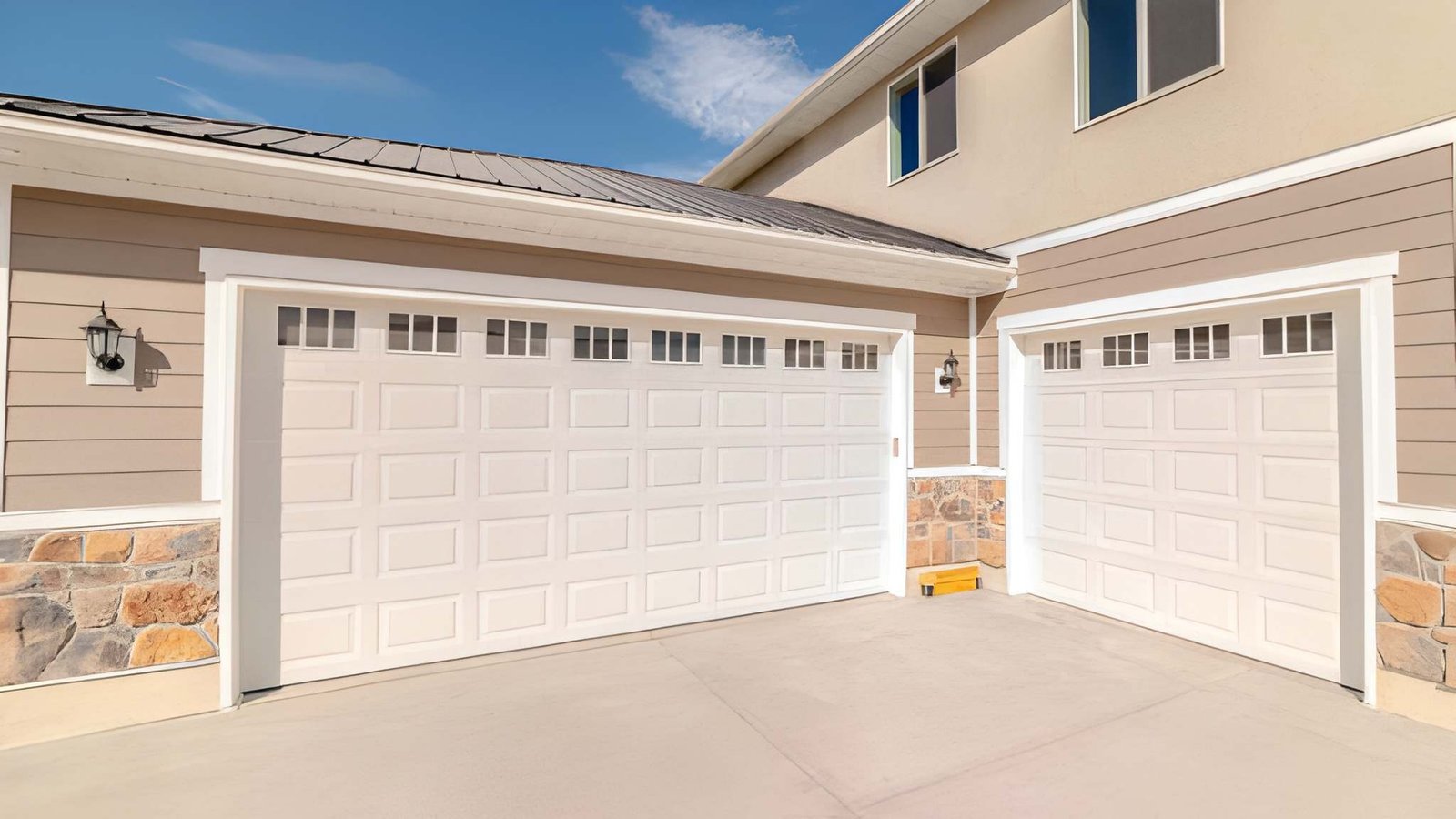
- Sight along the top edge of each section — look for bowing or buckling.
- Check both vertical tracks for kinks, and the wall brackets for movement.
- Look at the cables: any slack, or a cable off its drum, means stop.
- Check the bottom section for water damage and the seal for tears.
- Look for daylight around the frame that was not there before.
If anything looks out of line, leave it closed and call. A door that has taken wind load can look fine and still be running on a bent track.
BH Garage Door USA technicians
Water damage is slower but real
Standing water against the bottom section is how the base of a steel door starts to corrode. If your garage flooded, dry it out, check the bottom section carefully and consider whether the seal or the driveway slope contributed.
If the power was out
Check the Garage Door Opener before trusting it. Surges during restoration are hard on control boards, and a board that survived the storm sometimes fails a day later. If the opener behaves oddly — erratic travel, ignoring the remote, lights flickering — have it looked at rather than cycling it repeatedly.
For insurance
Photograph anything damaged before it is repaired, including the wind-load label if it is legible. It makes the claim conversation considerably easier.
Why the garage door is the one that matters
Ask a structural engineer about hurricane damage to houses and the garage door comes up almost immediately.
Short version? It is the largest opening in the building. If it goes, wind gets inside, and pressure then builds against the roof structure from underneath.
What began as a door problem becomes a roof problem very quickly. We say that from experience, not from a brochure.
Finding out what yours is rated for
There should be a label inside the door, usually on one of the sections or on the track.
Here is the bit we would want to know. It states a design pressure — how much positive and negative pressure the assembly can take. Positive is wind pushing in. Negative is suction pulling out.
Suction is what usually takes a door, which is why anything that only resists inward push is not enough on its own.
No label anywhere? Assume it is unrated until somebody proves otherwise. That is not a sales line. It is just how the hardware behaves.
Our pre-season checklist
Every visit runs the same way, whatever the original complaint was. It is quicker than it sounds, and it stops us treating a symptom and calling it a fix.
- Confirm the door is rated for your address, and that the label is still there and readable.
- Tighten every track bracket and lag bolt — wind finds loose fixings first.
- Check the bottom seal, because a failed seal lets water in with no wind at all.
- Test the balance and both safety reverses.
- Look for rust at the bottom section, especially within a few miles of salt water.
- Confirm the Garage Door Opener has a working battery backup.
If something on that list is worn but not urgent, we say so and give you a rough idea how long it has left. That way you can plan instead of react. We say that from experience, not from a brochure.
The mistake we see most
Propping timber against the inside of the door and calling it bracing.
And this is usually where it goes wrong. It does not work. Most failures are suction pulling the door outward, and a prop does nothing at all against that.
A retrofit bracing kit engineered and approved for your specific door does work — and it is far cheaper than replacing the door. That is not a sales line. It is just how the hardware behaves.
The short version
If you take one thing away from all of that: a door that is balanced, lubricated and has working safety reverses will outlast one that is not. By years, not months.
Almost everything we get called out to was preventable. Most of it was cheap to prevent, too.
So if any of this sounds like your door, get eyes on it while it is still an inconvenience rather than a breakdown. We would rather do the small job.
Why the garage door is the one that matters
Ask a structural engineer about hurricane damage to houses and the garage door comes up almost immediately.
Here is the bit we would want to know. It is the largest opening in the building. If it goes, wind gets inside, and pressure then builds against the roof structure from underneath.
What began as a door problem becomes a roof problem very quickly. It is a small thing that turns into a big thing.
Finding out what yours is rated for
There should be a label inside the door, usually on one of the sections or on the track.
Here is the part people tend to skip. It states a design pressure — how much positive and negative pressure the assembly can take. Positive is wind pushing in. Negative is suction pulling out.
Suction is what usually takes a door, which is why anything that only resists inward push is not enough on its own.
No label anywhere? Assume it is unrated until somebody proves otherwise. That is not a sales line. It is just how the hardware behaves.
Our pre-season checklist
Every visit runs the same way, whatever the original complaint was. It is quicker than it sounds, and it stops us treating a symptom and calling it a fix.
- Confirm the door is rated for your address, and that the label is still there and readable.
- Tighten every track bracket and lag bolt — wind finds loose fixings first.
- Check the bottom seal, because a failed seal lets water in with no wind at all.
- Test the balance and both safety reverses.
- Look for rust at the bottom section, especially within a few miles of salt water.
- Confirm the opener has a working battery backup.
If something on that list is worn but not urgent, we say so and give you a rough idea how long it has left. That way you can plan instead of react. We say that from experience, not from a brochure.
The mistake we see most
Propping timber against the inside of the door and calling it bracing.
Worth saying plainly. It does not work. Most failures are suction pulling the door outward, and a prop does nothing at all against that.
A retrofit bracing kit engineered and approved for your specific door does work — and it is far cheaper than replacing the door. Nobody enjoys hearing it, but it saves money.
The short version
If you take one thing away from all of that: a door that is balanced, lubricated and has working safety reverses will outlast one that is not. By years, not months.
Almost everything we get called out to was preventable. Most of it was cheap to prevent, too.
So if any of this sounds like your door, get eyes on it while it is still an inconvenience rather than a breakdown. We would rather do the small job.
We cover 54 Florida cities, usually same day.